Where new drivers learn to get covered with confidence
Covered & Confident: Auto Insurance 101 is designed to help you understand auto insurance and the financial responsibility that comes with driving. Many new drivers buy insurance without fully knowing what their coverage means or how much protection they actually need. This website breaks down insurance terms, coverage options, and real-world scenarios in a simple and easy-to-understand way so you can make confident decisions about your policy. Our goal is to help you become a more informed, protected, and financially responsible driver.
WHAT IS AUTO INSURANCE
Auto Insurance:
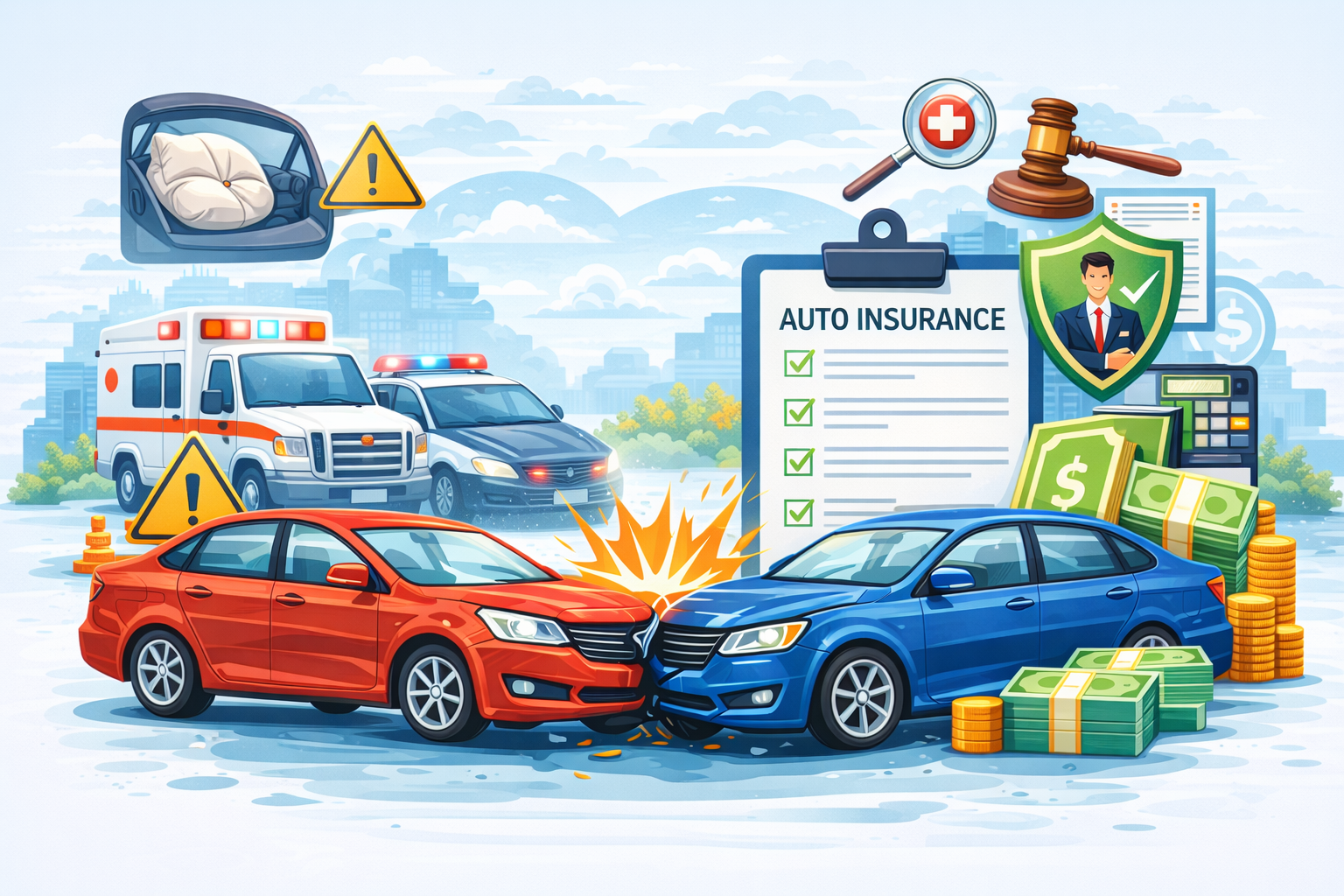
A legal and financial contract between a driver and an insurance company where the driver pays a premium in exchange for financial protection against certain vehicle-related losses.
-Why Auto Insurance Exists:
To reduce financial risk after accidents
To pay for injuries and property damage
To meet legal requirements set by states

MISSOURI LEGAL REQUIREMENTS
Missouri Minimum Auto Insurance Requirements:
Missouri law requires all drivers to carry liability insurance.
Minimum Liability Limits in Missouri:
$25,000 Bodily Injury per person
$50,000 Bodily Injury per accident
$25,000 Property Damage per accident
These limits are commonly written as 25/50/25.
Proof of Insurance:
Drivers must carry proof of insurance at all times. Failure to provide proof can result in fines, license suspension, and vehicle registration suspension.
Learn more about Liability here.
POLICY TERMS & DEFINITIONS
Premium:
The premium is the amount you pay to keep your insurance policy active. It can be paid monthly or yearly and is based on risk factors like driving record, location, coverage choices, and deductible.
Full Coverage:
Full coverage is a term used by banks for vehicles that have loans on them. Full coverage is not an insurance term but it is used to describe having both comprehensive and collision coverage’s.
Deductible:
The deductible is the amount you pay out of pocket before your insurance covers a loss. Higher deductibles usually lower your premium, while lower deductibles increase it.
Policy:
A policy is the legal contract between you and the insurance company. It explains what is covered, coverage limits, exclusions, and each party’s responsibilities.
Policyholder:
The policyholder is the person who owns the insurance policy, pays the premium, and can make changes to the coverage.
Coverage Limit:
A coverage limit is the maximum amount your insurance company will pay for a covered loss. Any costs beyond that limit are your responsibility.
Claim:
A claim is a request you file with your insurance company for payment after a covered loss. The insurer reviews the claim and pays based on your policy terms.
Exclusion:
An exclusion is something your policy does not cover. These are listed in the policy and explain what the insurance company will not pay for.
Endorsement:
An endorsement is a change or addition to your policy that adjusts coverage. It can add protection, remove coverage, or modify policy terms.
CLAIMS PROCESS DEFINITIONS
At-Fault Accident
An accident where the policyholder is determined to be responsible for causing damage or injuries. Liability coverage pays for the other party’s losses. Being at fault may increase future premiums.
Not-At-Fault Accident
An accident where another driver is responsible. The at-fault driver’s insurance should pay for damages, although your insurer may assist with handling the claim.
Adjuster
A trained insurance professional who investigates claims by reviewing police reports, photos, medical records, and repair estimates. The adjuster determines fault, coverage, and payment amounts.
Claim
A formal request submitted to an insurance company asking for payment based on policy coverage after a loss or accident.
Deductible
The amount the policyholder must pay out of pocket before insurance coverage applies. Higher deductibles usually result in lower premiums.
Estimate
A repair cost evaluation prepared by a repair shop or appraiser that determines the cost to restore damaged property or vehicles.
Settlement
The final payment issued to resolve a claim. Payments may go to the policyholder, repair shop, medical provider, or another party involved.
Subrogation
The process by which your insurance company seeks reimbursement from the at-fault party’s insurer after paying your claim.
Missouri Note:
Missouri is an at-fault state, meaning the driver who caused the accident is financially responsible for damages. Drivers must carry proof of insurance and show it during traffic stops or after accidents. Failure to maintain insurance can result in fines, license suspension, and reinstatement fees.
MISSOURI FINANCIAL RESPONSIBILITY TERMS
Financial Responsibility Law :
Missouri law requires drivers to demonstrate the ability to pay for damages they cause through auto insurance or approved alternatives.
SR-22: Safety Responsibility - 22
A form filed by an insurance company to the Missouri Department of Revenue proving high-risk insurance coverage. Often required after serious violations such as DUI or driving without insurance.
Out-of-Pocket Cost:
Expenses paid directly by the policyholder that are not covered by insurance.
COST & RISK FACTORS
Risk
Risk is the likelihood that an insurance company will need to pay a claim. The higher the risk, the higher the premium, because insurers expect a greater chance of loss. Companies use statistical data and personal information to estimate risk and set pricing.
Rating Risk Factors
Age
Younger drivers, especially teens, pay higher premiums due to limited experience and higher accident rates. Rates often decrease with age, safe driving experience, and a clean record.
Driving Record
Traffic violations, accidents, DUIs, and past claims increase premiums because they indicate higher risk. Safe driving over time may qualify drivers for discounts.
Location
Where you live affects your rate. Areas with heavy traffic, higher crime rates, severe weather risks, or higher accident frequency typically have higher premiums. Rural areas usually cost less than urban areas.
Vehicle Type
The make, model, age, repair costs, and safety features of a vehicle influence insurance rates. Sports cars and luxury vehicles are more expensive to insure, while vehicles with strong safety ratings and lower repair costs are cheaper.
Coverage Amounts
Higher liability limits and lower deductibles increase premiums but provide greater financial protection. Lower coverage limits cost less but increase out-of-pocket risk after an accident.
Annual Mileage & Vehicle Use
Drivers who travel long distances or use their vehicle for work have increased exposure to accidents and may pay higher premiums.
Types of Coverages

Other Coverages